


EU citizens rights after Brexit depend first on timing: the Withdrawal Agreement residence framework covers people who arrived in the UK on or before 31 December 2020, and a successful status application is the practical condition, according to IAS Services.
Start by checking your arrival date, then whether you hold settled or pre-settled status. For the wider sequence of events that led to that cut-off, see the Brexit timeline. The sections below turn the official framework and the institutions behind it into a set of practical choices.
Where to start: choose your situation
The right starting point depends on your circumstances rather than on the whole Brexit story. Pick the line below that matches you, read that section first and follow the linked guide for detail.
- Arrived by the cut-off date. If you were living in the UK on or before 31 December 2020, the framework described by IAS Services is the one that applies to you. Your next question is which status you hold, so go to the status section below.
- Arrived later, or thinking about long-term options. The framework is defined by the arrival date, so a later arrival should look at separate routes. The guide on how to apply for British citizenship as an EU citizen covers citizenship and residence applications.
- Joining or sponsoring relatives. Family situations have their own conditions, set out in the guide on how to bring family to UK EU settled status.
- Using health services. Health access is not governed by residence status alone, as explained later in this guide. The dedicated page on EU citizens access to NHS after Brexit deals with healthcare and benefits.
- Needing to show your status. Employers, landlords and others may ask for evidence. The guide on how to prove EU settled status explains the proof options.
- Living in Northern Ireland. The position there has its own features; see Irish citizenship rights Northern Ireland Brexit.
- Living in Scotland. Local support and information sit in EU citizens advice Scotland.
- Wanting to understand the institutions. If your interest is how the EU makes decisions, begin with what are the EU institutions.
If your arrival date falls on or before the cut-off, the rest of this guide follows the order in which most people meet the rules: what changed, who is covered, which status applies and where the limits lie.
What changed when the transition period ended
The Brexit transition period ended on 31 December 2020, and on that date the UK left the EU’s internal market, according to IAS Services. Free movement ended with it. That is the single most important change for anyone asking about EU citizens rights after Brexit, because everything that followed was built around that date.
Before the end of the transition, EU citizenship underpinned the right of people to move and reside freely within the territory of the EU. After it, the residence of EU citizens in the UK rested on a negotiated framework rather than on free movement. The practical effect is that a citizen’s position now depends on documents and records, not on nationality alone.
Analysis from the research initiative UK in a Changing Europe adds a domestic-law layer. It notes that the 2018 Withdrawal Act ensures that provisions of European Union law on freedom of movement of persons remain applicable in the scenario it analyses. Readers who want to see how EU-derived rules continue to sit inside domestic law can read what is retained EU law.
The decision for readers is simple. Treat 31 December 2020 as the dividing line in any conversation about rights, and check which side of it your own residence history falls on before reading anything else.
Who the Withdrawal Agreement covers
The 2019 Withdrawal Agreement between the EU and the UK set a framework for the continued legal residence and associated rights of people already in the UK by 31 December 2020. IAS Services describes the covered group as EU citizens who had crossed the border before 1 January 2021 to build a life in the UK.
The cut-off date in practice
The cut-off is a hard edge. Arriving on or before 31 December 2020 places a person inside the framework; the framework does not extend automatically to later arrivals. For someone who moved shortly before the date, the sensible step is to keep records of the move, because the status process is built on showing residence.
What the framework gives you in practice
Two features make the framework more than a political promise. EU citizens in British courts can rely directly on the provisions of the Withdrawal Agreement, so the rights are not purely a matter of administrative discretion. The Agreement also requires an independent authority to monitor the implementation of citizens’ rights for EU citizens in the UK. Both points come from IAS Services.
For a reader weighing a dispute, the court point matters most. If an official decision seems inconsistent with the Agreement, the legal basis for challenging it is the Agreement’s own text, which is where qualified advice should start.
Where rights are less certain
UK in a Changing Europe states that the Withdrawal Agreement does not guarantee all current rights. It points to areas such as access to health provision that depends on coordination and payments between the NHS and health services in the EU, which domestic Acts alone do not secure. The same analysis observes that Section 8 of the Withdrawal Act leaves considerable leeway for the government to amend the status of EU citizens. Read the full discussion at UK in a Changing Europe.
The decision from this is to separate the right to reside from every other entitlement. Residence status is the foundation, but health coordination, pensions and similar matters rely on further arrangements, so they deserve their own check, starting with the guide on EU citizens access to NHS after Brexit.
Settled and pre-settled status
Status under the UK’s scheme comes in two forms, and which one you hold shapes how secure your position is. According to IAS Services, settled status grants indefinite rights to remain in the UK, while pre-settled status offers a five year stay.
Opening date and deadline
The EU Settlement Scheme opened on 30 March 2019, and the deadline for applications was 30 June 2021. That window explains why most guidance written about status refers to the scheme in the past tense: the period for ordinary applications was fixed and has passed.
The consequence of missing the deadline is stated plainly by the same source. Those who failed to successfully apply for either pre-settled or settled status by 30 June 2021 were left without status. Anyone in that position should not assume that the matter resolves itself, and should seek current official guidance and independent advice promptly.

How the application question is answered
The question of how to apply for settled status has a structural answer before it has a procedural one. In the UK’s constitutive system, residents must successfully apply for a new residence status. The right is created by a successful application, so holding an EU passport and living in the UK is not enough on its own.
That is why the word “successfully” appears so often in the official framing. An application can be refused or can result in the lesser status, so the outcome matters as much as the act of applying. Anyone holding only a receipt or an acknowledgement should confirm what outcome they actually received.
Which status fits which person
- Settled status. It suits people who want indefinite rights to remain and do not want to plan around an expiry date.
- Pre-settled status. It suits people whose stay in the UK is shorter so far, but it is time-limited at five years, so holders should plan what comes next rather than assume it converts without action.
- Neither status. People in this group are those described above as lacking status after 30 June 2021 and should treat the situation as urgent.
Scale of the scheme
By 28 February 2021, around 5.1 million applications had been made and about 4.6 million were successful, according to IAS Services. The volume shows how widely the scheme was used, and it means a very large number of people will at some point need to prove what they hold. For that, use the guide on how to prove EU settled status. For turning residence into citizenship, see how to apply for British citizenship as an EU citizen.
Constitutive and declaratory systems compared
The UK is not the only country that required applications from resident citizens of other states. IAS Services reports that the UK and 13 EU Member States have chosen to adopt constitutive systems, while 14 have chosen declaratory systems.
The difference matters in practice. In a constitutive system, residents must successfully apply for a new residence status, and without it they do not hold the status. The 14 declaratory states take the other approach, which does not make a new application the thing that creates the right. For British citizens living in the EU, which system their country uses therefore changes how much they need to do to keep their position.
The same source notes one further contrast for travel. After the transition, UK citizens in the EU need a visa to stay longer than 90 days in total within any six-month period. This contrasts with the settled position of those covered by a residence framework and reminds readers that short stays and residence are separate legal questions.
The decision point for a reader with family or friends on both sides is to avoid assuming symmetry. The principle of reciprocity was a stated demand of the European Parliament, but each country’s practical system can still differ, so rely on the rules of the country where the person actually lives.
How EU institutions shaped the citizens’ rights debate
The European Parliament set out its position in a resolution of 5 April 2017 on negotiations with the United Kingdom (2017/2593(RSP)), recorded in European Parliament committee documents. In it, Parliament demanded that the status and rights of EU-27 citizens residing in the United Kingdom be treated under the principles of reciprocity, equity, symmetry and non-discrimination.
Those four principles are a useful yardstick for reading any later rule. Reciprocity asks whether rights granted in one direction are matched in the other. Non-discrimination asks whether citizens of different states are treated alike. A resolution is a political position rather than a binding treaty text, so it should be read as the standard Parliament wanted applied, not as the final legal outcome.
Parliament, Commission and Council: who does what
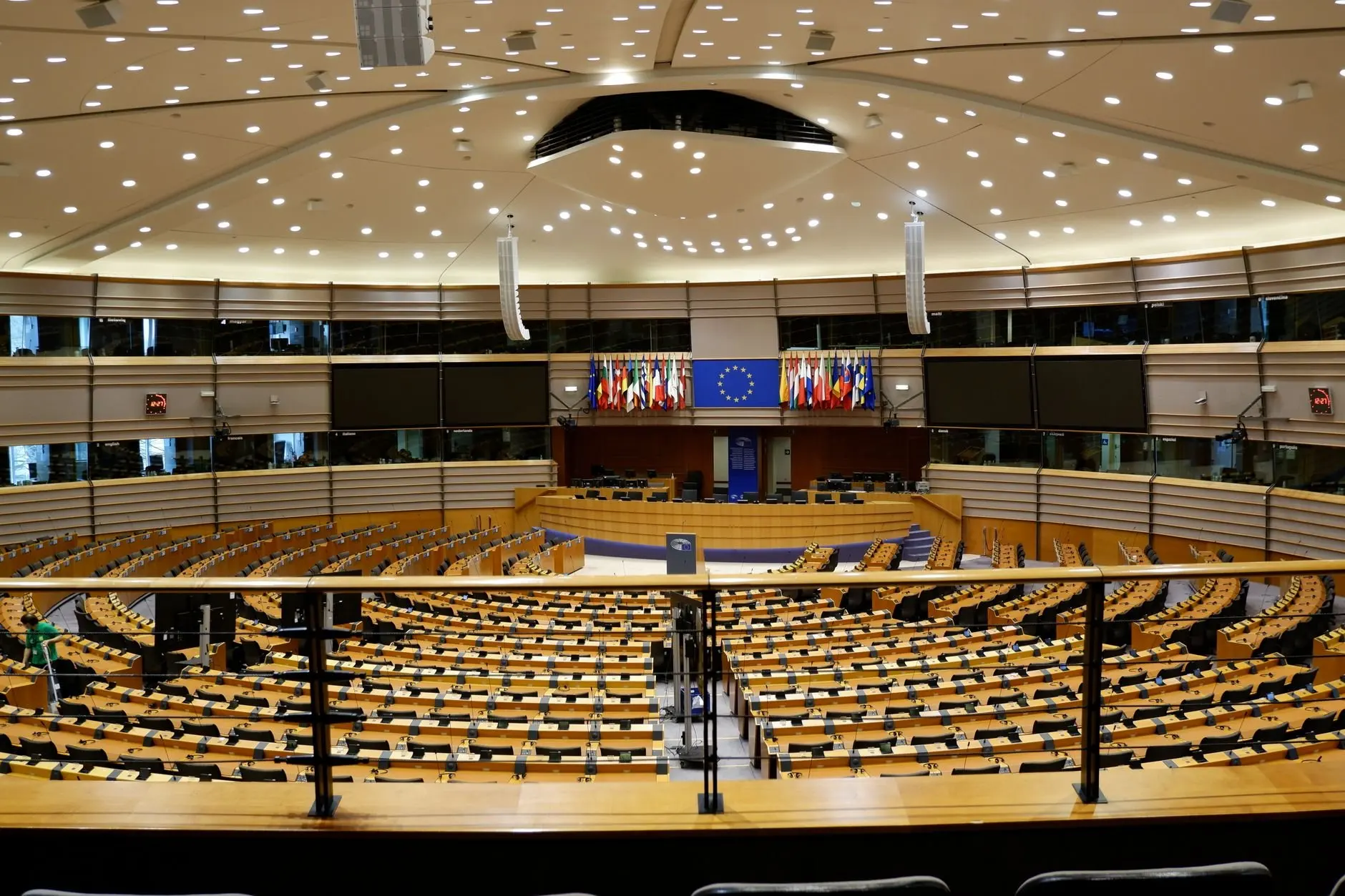
Understanding which body said what stops readers confusing a Parliament demand with a negotiated result. The European Parliament speaks for elected representatives, while other bodies handle negotiation and decision-making in different ways. The overview of what are the EU institutions sets out the roles, and the explainer on the European Commission vs European Council difference deals with the pair most often mixed up.
For the legislative side, the guide on how are EU laws made shows where Parliament’s approval fits. That context helps explain why a Parliament resolution carried weight in the Brexit talks without being the final text.
Exit mechanics and later agreements
The process by which a member state leaves is covered in what is Article 50, and the relationship that followed on trade and cooperation is explained in what is the EU UK Trade and Cooperation Agreement. These matter for citizens because the residence rules discussed above come from the Withdrawal Agreement track, while trade arrangements are a separate subject.
Elections and how governments are structured
Elections are how citizens influence the bodies that wrote these rules. The European Parliament is the directly elected institution among those discussed here, and its procedures, from voting to seat allocation, are explained in the guide on how do European Parliament elections work. That guide is the place to look for election mechanics.

Government design also affects how fast rights can change. Some systems fuse the executive with the legislature, while others separate them, and the comparison in parliamentary vs presidential system sets out the difference. It is relevant here because UK in a Changing Europe highlights ministerial leeway in the 2018 Withdrawal Act: how far a government can amend rules by its own powers depends on how the system allocates authority.
The practical decision for readers is to follow both layers. Watch the legislation and ministerial powers that shape status, and the courts that can enforce the Agreement. The first can change faster than the second.
Devolved government and local advice
Citizens’ rights questions arise in everyday settings such as councils, advice centres and public offices, not only in national debates. For people in Scotland, the national parliament sits in Edinburgh, and the page on EU citizens advice Scotland collects information resources and support for EU citizens there.

Choose local advice when your question is about a specific document, an application outcome or a decision by an official. National guidance explains the framework, but a local adviser can look at the paperwork in front of you. Those in Northern Ireland should read the separate guide on Irish citizenship rights Northern Ireland Brexit, because the position there differs.
Status outcomes at a glance
The table below turns the status information above into a planning aid.
| Outcome | What it means | Share of granted applications | Planning use |
|---|---|---|---|
| Settled status | Indefinite rights to remain in the UK | About 53% had permanent status | Suits people who want no expiry; keep proof available |
| Pre-settled status | A five year stay | About 44% had temporary status | Plan the next step before the period runs out |
| No status after the deadline | Without status after 30 June 2021 | Not applicable | Seek current official guidance and advice promptly |
The figures and conditions come from IAS Services, which reported the shares as of applications granted by 28 February 2021.
Frequently asked questions
What rights do EU citizens have in the UK after Brexit?
Those who were in the UK by 31 December 2020 fall under the Withdrawal Agreement framework for continued legal residence, as described by IAS Services. The Agreement can be relied on in British courts, but not every earlier right is guaranteed, so health and pension coordination need separate checking.
How do I apply for settled status?
The UK uses a constitutive system, so residents had to successfully apply for a new residence status. The scheme opened on 30 March 2019 and the deadline was 30 June 2021, according to IAS Services. Anyone without a result should seek current official guidance and advice.
What is the difference between settled and pre-settled status?
Settled status grants indefinite rights to remain, while pre-settled status offers a five year stay. Holders of the shorter status should plan for what follows it, and the guide on how to apply for British citizenship as an EU citizen covers longer-term routes.
Who checks that citizens’ rights are respected?
The Withdrawal Agreement requires an independent authority to monitor implementation of the rights of EU citizens in the UK, according to IAS Services. Courts are the other safeguard, since the provisions can be relied on directly.