

| Symptom | First action | Planning use |
|---|---|---|
| Panelists arrive unsure how the session will run | Describe the rules of engagement and contact them in advance | Schedule the briefing contact about one month before the event |
| The session opens with prepared presentations | Open with a question to the panel instead | Draft the opening question before the day |
| Statements run long | Remind speakers that statements should stay short | Agree a signal with panelists in the briefing |
| One panelist dominates | Apply techniques for challenging panelists | Plan which panelist to turn to next |
| The audience stays quiet | Move to prepared additional questions | Keep spare questions in the notes |
| A panelist raises an issue that was not on the agenda | Let the panelist address it | Leave some flexibility in the running order |
| The discussion ends without a takeaway | Summarise the conclusions | Reserve closing time for the summary |
The quick-reference points draw on moderator training content from Dooley Communications and a moderator’s account of chairing a conference panel.
Knowing how to moderate a panel discussion comes down to preparing the panelists, opening with questions rather than speeches, and controlling time without silencing anyone. The same approach suits a policy seminar or a public event.
This guide takes the moderator’s seat, not the organiser’s or a speaker’s. For the wider landscape of public policy events, start with the hub. Readers comparing a panel with a formal consultation session may also want to read what is a public hearing.
What a moderator does before the event
A moderator’s job starts well before the panel sits down. Dooley Communications’ moderating training lists the role and responsibilities of the moderator and the essential steps of preparation as its starting point, which is a sensible order for any policy panel: understand the role, then prepare.
Contact the panelists early
One moderator’s account of chairing a youth policy panel in Krakow recommends contacting the panelists one month prior to the event. Early contact gives panelists time to ask about the format, and it gives the moderator time to learn what each person actually wants to discuss. Leaving contact until the day risks panelists who have not considered the rules or the running order.
Research beyond the organiser’s profile
The same account advises looking beyond the profiles supplied by the organiser and learning about each panelist’s latest project, so that questions are relevant. For a policy panel, that usually means reading recent reports, consultation responses or published commentary by each speaker, so that a question can name a specific piece of work and not a general topic.
Build the briefing notes
Moderator briefing notes are the single document that holds the preparation together. Supported elements include:
- Role and responsibilities. A short statement of what the moderator will do and what is left to the panelists and organiser, drawn from the training’s emphasis on the moderator’s role.
- Rules of engagement. The ground rules the moderator will describe at the start, so the notes and the opening announcement match.
- Panelist research. The project, publication or position that makes each question specific.
- Format structure. How the discussion is divided, drawing on the training’s focus on structuring different discussion formats.

Setting up the panel
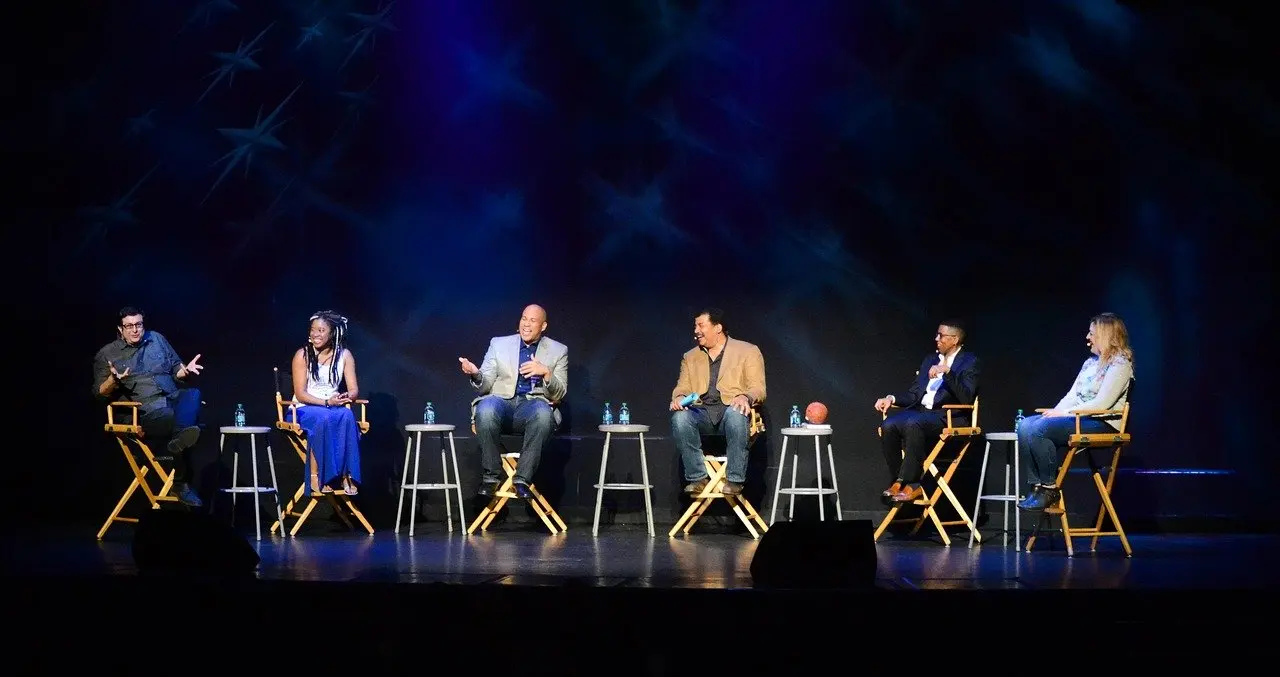
Seating and sound shape how the moderator is perceived. The moderator in the Krakow account advises sitting right between the panelists. A central seat lets the moderator turn to either side, keeps eye contact balanced and avoids appearing to favour one end of the table.
Format matters as much as position. Dooley’s training covers structuring different discussion formats, so decide before the event whether the panel will run as a moderated conversation, a series of themed rounds or something else the organiser has set. A policy seminar with several themes usually benefits from sections the moderator can signpost aloud, so that the audience follows the shift from one topic to the next.
Opening the discussion and writing opening questions
Open with a question, not with speeches. The Krakow account says that starting with previously prepared initial statements or presentations is a bad idea. Presentations front-load the session with monologue; a direct question gets panelists talking to each other and to the audience from the start.
Describe the rules of engagement first
Before the first question, the moderator should describe the rules of engagement: how the discussion will run, how speakers will be brought in and when the audience can join. Stating the rules aloud makes later interruptions easier, since panelists and audience have already heard how the session works.
Write opening questions that are specific
Good opening questions come from the research on each panelist. Asking about a speaker’s latest project is more productive than asking a panelist to introduce an organisation the audience can read about in the programme. Dooley’s training aims for an opening and closing “with impact” and for a lively, interactive and focused discussion, so choose a first question that invites a position or a disagreement and not a summary of credentials.
Frame questions so that any panelist can answer them and the answers can be compared. Policy audiences usually come for the differences between positions, and a question built around a specific trade-off exposes them quickly.
Keeping speakers to time
Time control is a matter of expectation-setting more than interruption. The Krakow account notes that the panelist statement shouldn’t take too long. Dooley’s training treats keeping to time and on track as a core moderating skill, so it belongs in the plan and not only in the moment.
Agree a signal in advance
Politeness depends on no one being surprised. If the organiser provides a timekeeper, agree with that person and the panelists how a signal will be given, such as a card held where the speaker can see it. Panelists who already know the signal read it as routine, not as a rebuke.

Interrupt with a purpose
When a speaker runs on despite the signal, acknowledge the point just made, then redirect with a question to another panelist or a narrower follow-up. Naming what was useful in the answer before moving on keeps the exchange courteous and keeps the schedule intact.
Handling dominant panelists, off-agenda points and hostile questions
A moderator’s job is to protect balance. Dooley’s training includes techniques for handling challenging panelists and audiences, which is a reminder that these situations are expected and can be planned for.
A dominant panelist
Where one voice is taking the discussion, break the pattern with a direct question to a quieter panelist, using a name and a specific topic from the research. Do this before frustration builds in the room. The aim is to widen participation, not to correct the dominant speaker publicly.
An issue that is not on the agenda
Not every deviation is a problem. The Krakow account advises that if a panelist asks for a chance to address an issue that was not on the agenda, let them. Allow it when the point is relevant to the audience, then return to the planned thread. If the point is only a hobby-horse, the moderator can offer to pick it up in the audience session.
Audience questions, including hostile ones
The same account suggests inviting comments from the audience once the initial discussion is under way. Letting the panel establish its positions first means audience questions land in a conversation already in motion.
When a question is hostile, restate it in neutral terms and put it to the most relevant panelist. Restating removes the heat while keeping the substance, and it gives the room a moment to settle. Dooley’s training on challenging audiences supports treating this as a skill to rehearse rather than improvise.
Closing the session
Close deliberately. The Krakow account says to summarize the conclusions stemming from the discussion. The moderator is the only person on stage who has listened to every contribution as a whole, so the summary is the point at which the session becomes useful to people who must leave and act on it.
Dooley’s training also emphasises closing with impact. A summary that names the main points of agreement and the main points still open serves that goal better than a vague word of thanks. Audiences who want to turn a panel into action can follow up with how to contact your MP about a policy issue.
Frequently asked questions
| Question | Answer |
|---|---|
| Does the approach change for virtual or hybrid events? | The moderator’s responsibilities stay the same. Dooley’s moderating training specifically addresses managing attention span at virtual, hybrid and in-person events, so plan the pacing for the format in use. |
| What if the audience has no questions? | Keep a set of additional questions ready, as the Krakow moderator advises, so the session continues without an awkward pause. |
| Is a script necessary? | A script works as a reference point. The same account says that preparing a script and practising at home are always good ideas. |
| What should the moderator write down during the discussion? | Important remarks from the panelists and any follow-up questions that occur. Those notes feed the closing summary and any later questions. |