

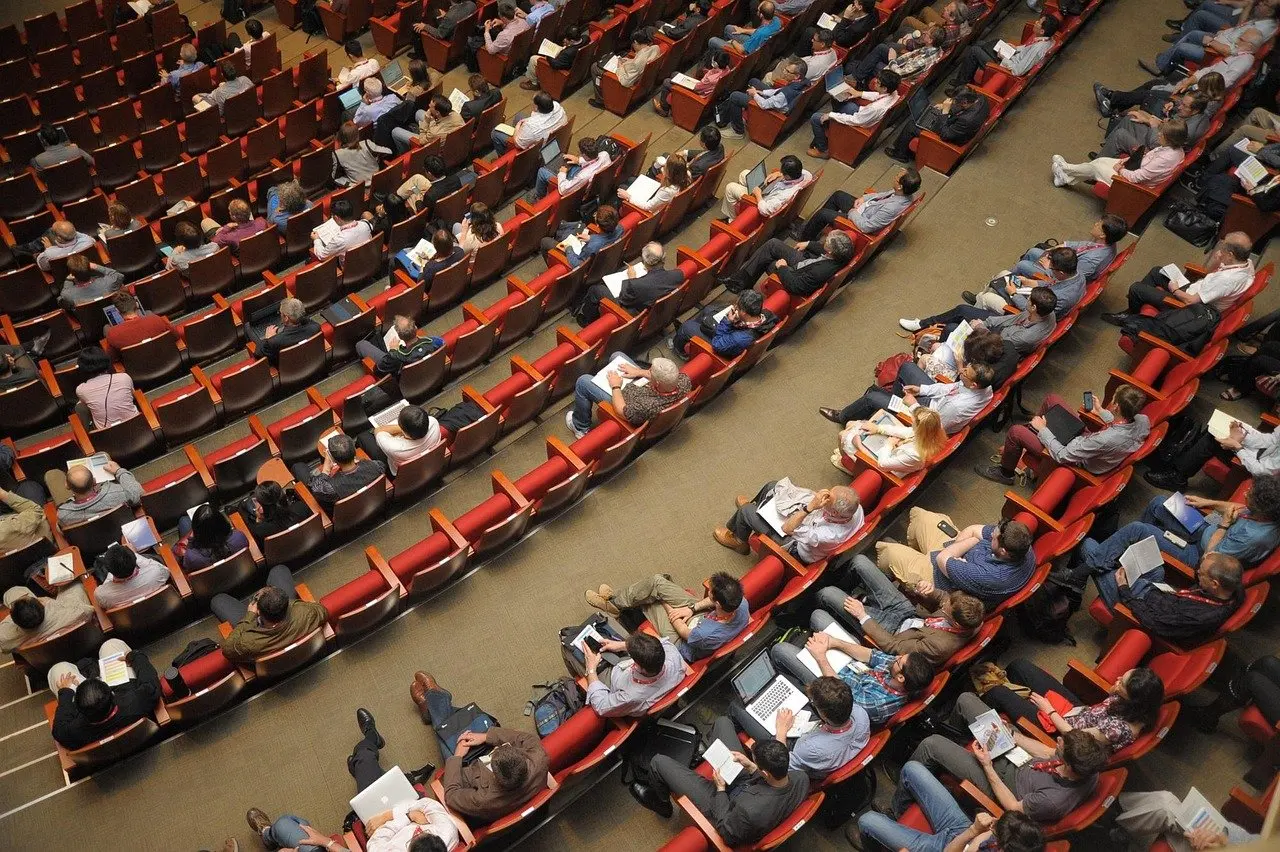
Someone sees a notice for a policy panel and wonders what happens inside. In short, how do public policy events work? A host assembles speakers and an audience, runs a set format, and follows up afterwards.
The wider field of public policy events includes hearings, consultations and conferences. This page stays with the anatomy of a single event: what happens, who is in the room and what each format is for.
Purpose and common misunderstandings
A policy event gives people with evidence, views or decision-making responsibility a bounded stretch of time together. According to Clarity’s guidance on designing public affairs events, such events are shaped around crowded diaries and limited attention. That makes an event one practical form of stakeholder engagement, because the format has to fit the time that invited people can actually spare.
Three misunderstandings come up often.
- “It is only a lecture.” Audience participation is usually part of the design. In a University of Chicago Harris course described by the Harris School of Public Policy, students studied the speakers’ research and policy papers first, then engaged them in candid discussions. They were urged to find their voices by asking thoughtful questions.
- “Every event is a formal process.” Formal processes such as a hearing, explained in what is a public hearing, are separate from the event formats compared below.
- “Only the speakers matter.” The invitation, the preparation beforehand and the follow-up afterwards are part of how an event works. The stages section below sets them out.
Policy event formats compared
Formats differ mainly in how the time is divided between presenting, arguing, working together and taking questions. The table contrasts the main ones.
| Format | What happens | Who is in the room | Planning use |
|---|---|---|---|
| Debate | Speakers argue opposing approaches to one policy dispute, then get rebuttal time | Speakers on opposing sides and an audience | Suits audiences who want to hear a dispute argued directly |
| Group forum | Speakers from divergent or opposing perspectives address a dispute, then take audience questions | Speakers and an audience who put questions | Suits audiences who want to test the arguments themselves |
| Panel | Several speakers share views, with live polling or moderated Q&A tools | Panellists, a chair and an audience | Works best when the panellists genuinely differ |
| Briefing | A short, well-briefed exchange with clear asks up front | An MP or peer and the person briefing them | Suits a specific request rather than open debate |
| Remote participation | Speakers or attendees join by video in place of travelling | The same mix as in person, joining online | A contingency when someone cannot attend in person |
The debate and forum definitions come from Florida State University’s public policy events office, and the panel, briefing and remote-participation points from Clarity’s public affairs events guidance.
Debates and group forums
Florida State University’s public policy events office was established by the Florida Legislature in July 2023. It describes both formats in statutory terms. In a debate, two or more participants speak in favour of opposing approaches to the same public policy dispute, and rebuttal time follows. In a group forum, two or more speakers address a dispute from divergent or opposing perspectives, and the audience can then ask questions. The practical difference is that a debate is built around argument between speakers, while a forum hands the second half to the room.
Panels and speeches
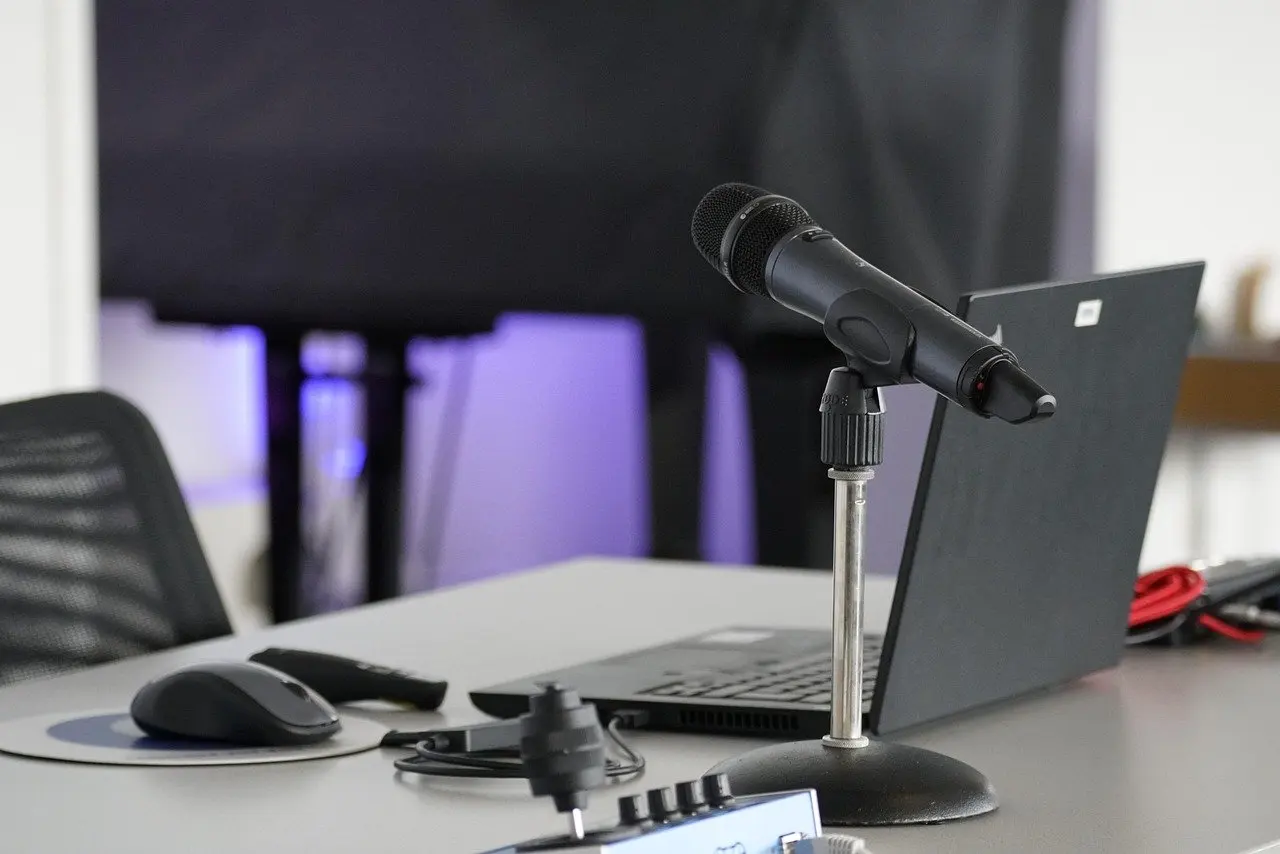
Panels are the format most people picture, but the guidance from Clarity is that a panel needs differing perspectives. Consensus may feel comfortable to an organiser, but it is not engaging for an audience. The same guidance recommends adding interactivity to panels and speeches, whether through live polling or moderated Q&A tools, so the audience does more than watch.
Seminars, workshops and consultation events
A seminar centres on a speaker’s evidence and a discussion of it. In the Harris course, preparation meant reading the speakers’ papers before the conversation, so the discussion could start from the research rather than an introduction to it. A workshop shifts the weight from listening to doing. The same Harris programme shows the principle: rather than working on hypothetical assignments, students joined active research projects.
A consultation event is different again, because it belongs to a formal exercise for gathering views, which what is a public consultation explains. In practice, a seminar informs, a workshop produces something and a consultation event collects input for a decision.

Briefings
A policy briefing is the shortest format. Clarity’s guidance advises keeping interactions short and well-briefed, with clear asks stated up front. For a one-to-one meeting with an MP or peer, it suggests compiling a one-page briefing and sending it in advance. A briefing suits a defined request. It is the wrong choice when the goal is open discussion among many views.

Online and hybrid events
Remote participation is treated as a practical option rather than a lesser format. Clarity lists stand-ins and remote participation as ways to keep an event on track when a planned speaker cannot attend in person. An online session suits a dispersed audience, and it works best when it keeps the same interactive tools as a room event.

Who is in the room
Hosts and speakers
Hosts come from several kinds of institution. Florida State University’s office is a university body created by law. The Harris programme brought students together with leaders from international bodies, research organisations and civil society. Public affairs consultancies such as Clarity design events for their clients. Think tanks and research institutes sit in the same space: the Urban Institute and Resources for the Future were among the organisations the Harris students met.
According to the Harris School, the 16 students in the first cohort met 18 leaders from 15 organisations, including the International Monetary Fund, the World Bank, the Urban Institute, Resources for the Future and non-governmental organisations. Speaker mix is a deliberate choice. Under the rules Florida State University’s office describes, speakers come from opposing sides of the issue. Speakers who are not from within the university community receive a per diem and a reimbursement for travel when needed.
The audience
Audiences vary with the purpose. Students and researchers attend to learn and to question speakers, as in the Harris course. Officials and legislators are a different audience, because their limited time shapes how the event is built, as the Clarity guidance on crowded diaries makes clear. A one-to-one briefing may involve only one decision maker, while a forum or panel is built for a room of people who all get to listen.
Stages from invitation to follow-up
Most events move through the same sequence, whatever the format.
- Invitation and details. Clarity notes that attendees need to know the location, timing and security arrangements as far in advance as possible, and to receive relatively frequent reminders.
- Preparation. Speakers’ papers or briefings are read before the session. In the Harris course, students studied the speakers’ research and policy papers before the discussions.
- The live session. Speakers present or argue, and the audience joins through questions or polling where the format allows.
- The public record. For debates and forums at Florida State University, the office’s rules require a video record to be posted on its website within 10 business days after the event. The record must stay publicly available for at least 5 years.
- Follow-up. Clarity’s advice is not to forget follow-up, which means the work continues after the room empties.
Frequently asked questions
| Question | Answer |
|---|---|
| Do I need an invitation or can I attend as a member of the public? | It depends on the host and the format. Debates and forums at Florida State University must be open to all students, faculty and staff and, generally, to the public, according to the university’s public policy events office. Other events send invitations with location, timing and security details in advance. |
| What does an event listing show? | The calendar kept by Florida State University’s office must itemise the title of the event, the name and institutional affiliation of the speaker, and the sponsor, so a listing shows who is speaking and who is behind the event. |
| Why do some events run at breakfast? | Clarity reports that breakfast events tend to work best for busy attendees, as there is less competition with other events than there is in the evening. |
| How often does a host have to run events? | That varies by host. Florida law requires its state university’s office to sponsor no fewer than four events each academic year, which works out as two per semester, according to the office’s own description. |